Statistical Forecasting in Tournament Poker: The Role of Player Data in Odds Compilation
Tina Franke · Sep 29, 2026

Statistical Forecasting in Tournament Poker: The Role of Player Data in Odds Compilation
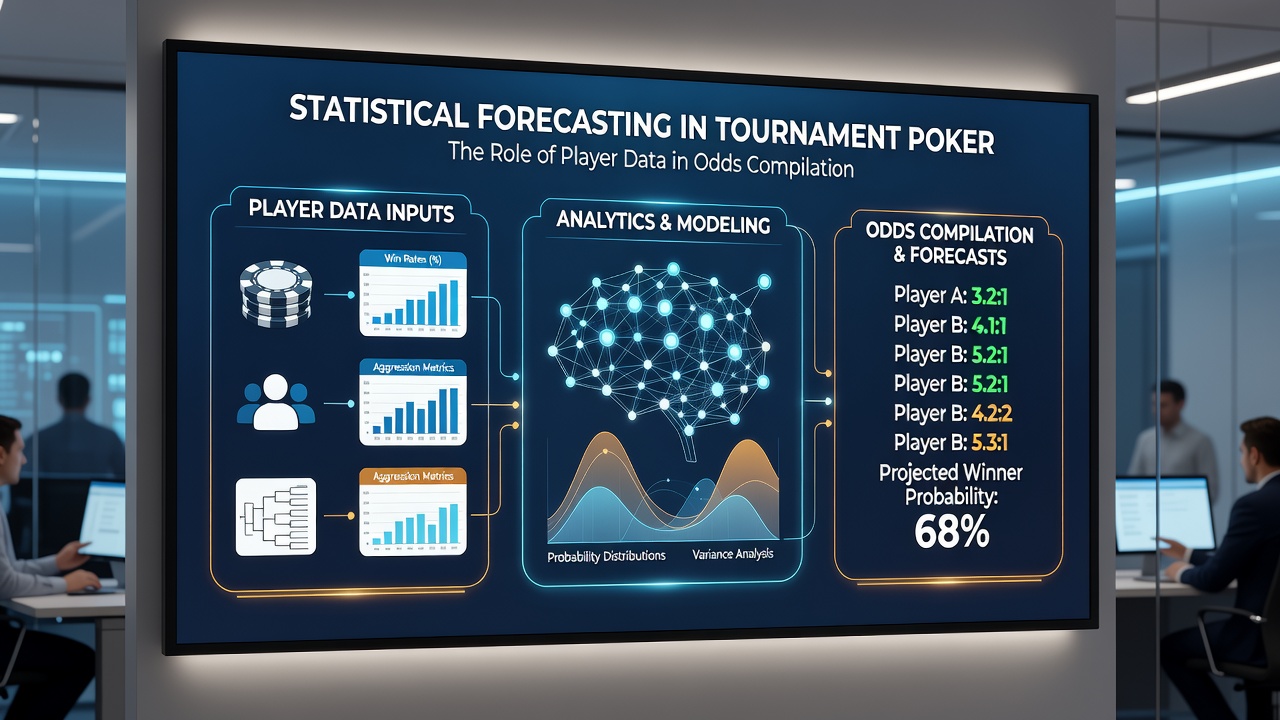
Statistical forecasting in tournament poker relies on extensive player data to compile accurate odds and projections, and researchers compile datasets from hand histories, performance metrics, and behavioral patterns to build predictive models. Data points such as voluntary put money in pot percentages, preflop raise frequencies, and fold to three-bet rates feed into algorithms that estimate win probabilities across varying stack sizes and table dynamics.
Core Data Inputs in Poker Forecasting Models
Analysts gather information from online poker platforms and live tournament tracking services, where each hand contributes to a player's statistical profile that evolves over thousands of samples. Studies from academic institutions show that incorporating positional data alongside aggression factors improves model accuracy by accounting for how players adjust strategies based on seat position and opponent tendencies. Those who compile these datasets often cross-reference results from multiple sources to reduce noise from small sample sizes, and September 2026 marked increased collaboration between data firms and tournament organizers seeking standardized reporting protocols.
Building Predictive Algorithms from Player Profiles
Statistical models apply techniques like logistic regression and Bayesian updating to transform raw player statistics into probability distributions for outcomes such as reaching the money or finishing in the top three. Observers note that ensemble methods combining multiple algorithms deliver more stable forecasts than single-model approaches, particularly when handling the high variance inherent in no-limit hold'em tournaments. Evidence from industry reports indicates that incorporating real-time updates during events allows odds compilers to adjust projections as new hand data emerges, creating dynamic lines that reflect shifting table conditions.
Integration of Historical Performance and Behavioral Metrics
Historical data sets spanning several years enable forecasters to identify long-term trends in player results, including how specific individuals perform under ICM pressure or with short stacks. Metrics like average profit per hand and showdown winning percentages add layers to these profiles, while temporal factors such as fatigue indicators derived from session length help refine estimates for late-stage tournament play. Research indicates that players with consistent sample sizes above 50,000 hands produce more reliable inputs for these systems than those with limited tracked activity.
Challenges in Data Quality and Model Calibration
Compiling accurate odds requires addressing gaps in public data availability, since many live tournaments lack comprehensive hand tracking and online platforms vary in the depth of statistics they release. Experts address these limitations through imputation methods and selective weighting of verified sources, and calibration against actual tournament results helps refine model parameters over time. Data from regulatory bodies in regions including the United States and Australia demonstrates how aggregated transaction records support broader trend analysis without compromising individual privacy.
Applications in Real-Time Odds Compilation
Odds compilation teams integrate player data feeds into software platforms that generate probabilities for specific matchups and payout structures, and these systems update continuously as new information arrives from ongoing events. Industry organizations such as the European Gaming and Betting Association have documented how standardized data protocols improve interoperability between tracking tools and forecasting engines. Forecasters also examine correlations between statistics like steal percentages and final table appearances to identify edges in specific tournament formats.
Future Developments in Poker Data Analytics
Advances in machine learning continue to expand the variables considered in forecasting models, including facial recognition patterns from live streams and voice analysis during televised final tables, though ethical guidelines govern such applications. Academic papers from institutions across Canada and the European Union highlight ongoing work to incorporate multi-player interaction effects that traditional independent models overlook. As datasets grow larger through September 2026 and beyond, the precision of compiled odds is expected to increase accordingly.
Conclusion
Player data forms the foundation of statistical forecasting systems used to compile tournament poker odds, and ongoing refinements in data collection alongside algorithmic techniques sustain the field's development. Sources ranging from university research papers to reports by gaming trade groups provide the empirical basis for these practices, ensuring forecasts remain grounded in observable patterns rather than speculation.